Unleash the Magic: A Beginner's Guide to Sourdough Starter Care for the Adventurous Baker

Updated: Jan 24, 2025
Sourdough baking is a delicious journey that brings together science, creativity, and a sprinkle of magic! At the heart of every delightful loaf is a vibrant sourdough starter, a mix of flour and water teeming with wild yeast and helpful bacteria. These elements work together to create the beloved tangy flavor that we all savor. Nurturing your sourdough starter is essential for baking success. So, roll up your sleeves and let’s dive into the essentials of sourdough starter care!
What is a Sourdough Starter?
A sourdough starter is a living culture that ferments and leavens dough. Unlike store-bought yeast, sourdough relies on the naturally occurring yeast and bacteria from your surroundings. By feeding your starter regularly, you encourage these microorganisms to thrive. A strong starter can elevate your baking, leading to beautifully risen bread. According to recent studies, bakeries that use a well-maintained sourdough starter can see a rise in sales of up to 20% due to the increased popularity of artisanal bread.

Getting Started: Creating Your Sourdough Starter
Before caring for your starter, you need to create one! Follow these steps for a smooth start:
Mix equal parts flour and water: Combine 100 grams of all-purpose or whole wheat flour with 100 ml of lukewarm water in a bowl.
Stir well: Mix until there are no dry clumps.
Transfer to a jar: Pour your mixture into a clean glass jar and cover it loosely with a breathable lid, such as a cloth or coffee filter secured with a rubber band.
Let it sit: Place your jar in a warm space (around 70°F to 75°F) for 24 hours. By day two, you should see small bubbles forming!
Creating a sourdough starter is just the beginning of your baking adventure, but it takes time and attention to nurture it to maturity.
Understanding Feeding Schedules
To keep your sourdough starter active, establish a feeding routine. Ideally, you should feed your starter once a day if kept at room temperature. Here’s how:
Discard: Remove half of the starter (about 100 grams).
Feed: Add 100 grams of flour and 100 ml of water to the remaining starter.
Mix: Stir until smooth and cover loosely again.
If baking isn't in your plans for a week or more, store the starter in the fridge and feed it weekly. When you're ready to bake, bring it back to room temperature and feed it for a couple of days prior to using it.
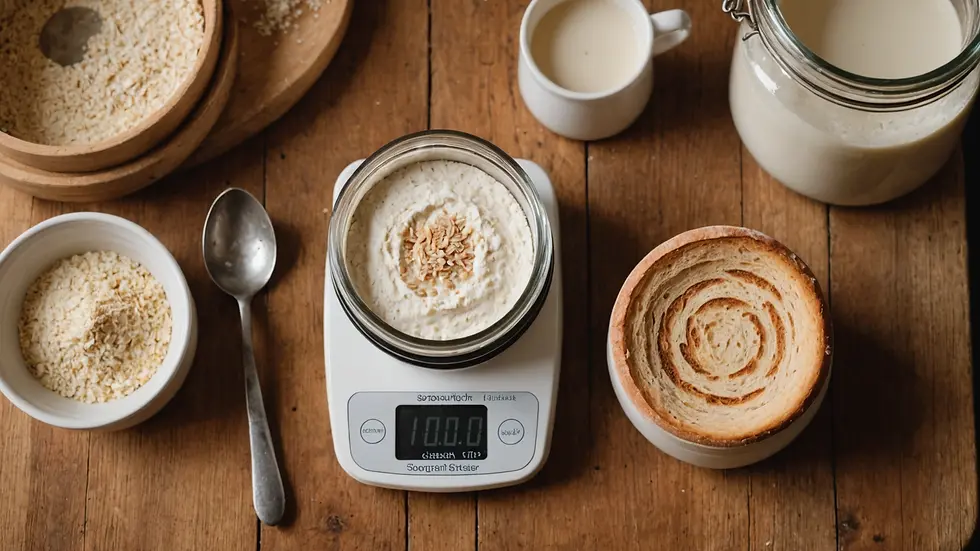
The Signs of a Healthy Starter
A thriving sourdough starter is a joy to watch! Look for these key signs of health:
Bubbles on the Surface: Indicates active fermentation.
Doubling in Size: After feeding, your starter should nearly double in size within 4 to 6 hours.
Pleasant Aroma: A nice sour and fruity smell shows your starter is doing well. A strange smell could mean it is unhealthy.
Monitoring these signs will help you gauge your starter's readiness for baking.
Troubleshooting Common Issues
Baking can come with its challenges. Here are some common issues with sourdough starters and how to resolve them:
Hooch Formation: A dark liquid on top of your starter is called “hooch” and signals hunger. Pour it off and feed your starter.
Inactivity: If your starter isn’t bubbling, ensure it’s in a warm spot and feed it more often until it perks up.
Excess Sourness: If your starter becomes overly sour, try switching to a different flour or adjusting your feeding schedule to make it less acidic.
Recognizing these issues will help keep your starter happy and healthy.
Baking with Your Starter
Now that you’ve cultivated a lively starter, it’s time to bake! Follow these steps to prepare for baking:
Feed your starter 4-8 hours before baking: Feed it and let it sit at room temperature. It should be bubbly and active when you're ready to use it.
Prep your ingredients: Gather your flour, water, and any additional ingredients you need.
Mix, knead, and shape: Follow your favorite sourdough recipe. Each loaf is a unique expression of your baking journey!
Baking with a well-fed starter results in delicious bread with impressive rise and flavor. Get ready to wow your friends and family with your homemade sourdough!

A Lasting Bond with Your Starter
Caring for a sourdough starter may seem intimidating, but it quickly becomes a rewarding routine. This living culture connects you to the rich tradition of bread-making. Nurturing your starter allows you to create not only bread but also a deeper connection with the world of cooking.
Understand that every baker's experience with their sourdough starter is unique. Embrace the process, adapt, and feel free to experiment.
Sourdough is a celebration of community, sharing, and enjoyment. Soon you will be sharing your freshly baked loaves with friends and even passing along some of your starter to fellow baking enthusiasts!
Embrace the Adventure
Step into the exciting world of sourdough starter care with enthusiasm! By learning the basics of feeding, keeping an eye on its health, and solving common problems, you will be well on your way to mastering this wonderful baking art.
Stay curious and celebrate the joy that comes from sourdough baking! Happy baking, adventurous bakers! 🌾🥖
Comments